Journal

Installing a performance chip does not automatically void your vehicle’s warranty. In the United States the Magnuson-Moss Warranty Act prevents a manufacturer from voiding a warranty simply because an aftermarket part is present. To deny a claim, the manufacturer has to show that the part caused the specific failure you are claiming. That is the law; how it plays out at the service counter is what this article is about.
This is general information, not legal advice. Warranty terms differ by manufacturer and by country.
Passed in 1975, the Act governs consumer product warranties in the US. Two parts matter for tuning:
What the Act does not do is protect a modification that actually breaks something. If a flash tune runs 25 psi of boost through a turbo rated for 18 and the turbo fails, the dealer can decline that repair, and they would be right to.
Dealers do not void whole warranties; they deny individual claims. A denial is legitimate when the failed component is one the modification plausibly affected. Examples:
A denial is not legitimate when the failure is unrelated: an infotainment fault, a window regulator, a wheel bearing or a paint defect have nothing to do with the engine calibration, and a dealer who cites a chip for those is bluffing.
Most ECUs built in the last fifteen years keep a flash counter and a checksum of the calibration. When a dealer connects the diagnostic tool, it reports whether the stored software matches the factory file and how many times it has been rewritten. Reflashing the stock file back before a visit does not reset that counter. This is how tuned cars get flagged, and several manufacturers apply a “tuner detected” policy on the basis of that counter alone.
A plug-in chip like Thorton’s never writes to the ECU. It works on the signals the ECU reads, within the limits the factory calibration already enforces, so the calibration file, the checksum and the flash counter are all untouched. Unplug it and there is nothing to find: no stored codes, no changed software, no adaptation values outside the normal range. That is why we suggest simply removing the chip before any dealer service. It takes ten seconds and removes the conversation entirely.
Not in the way a flash tune can. Because the ECU is still enforcing every limit it always did, knock control, boost limits, fuel cut and thermal protection are all active. The chip cannot push past them. It changes how quickly and how eagerly the engine uses the range it already has. The safety article goes into the engineering; the short version is that a signal-level chip has no mechanism to exceed the engine’s own design envelope.
Every Thorton chip ships with a 30-day risk-free trial: if it does not do what you expected, return it within 30 days for a full refund. The chip itself is covered by our lifetime warranty. Full terms are on the returns page.
Find your vehicle and see your gains in seconds.

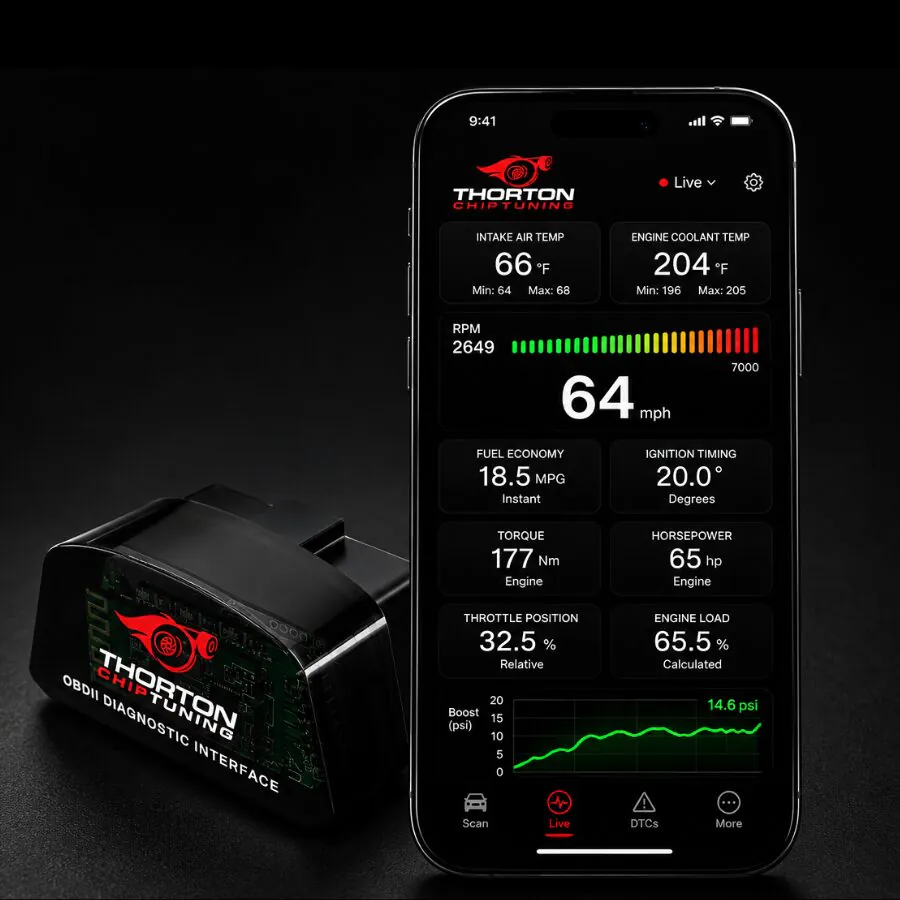
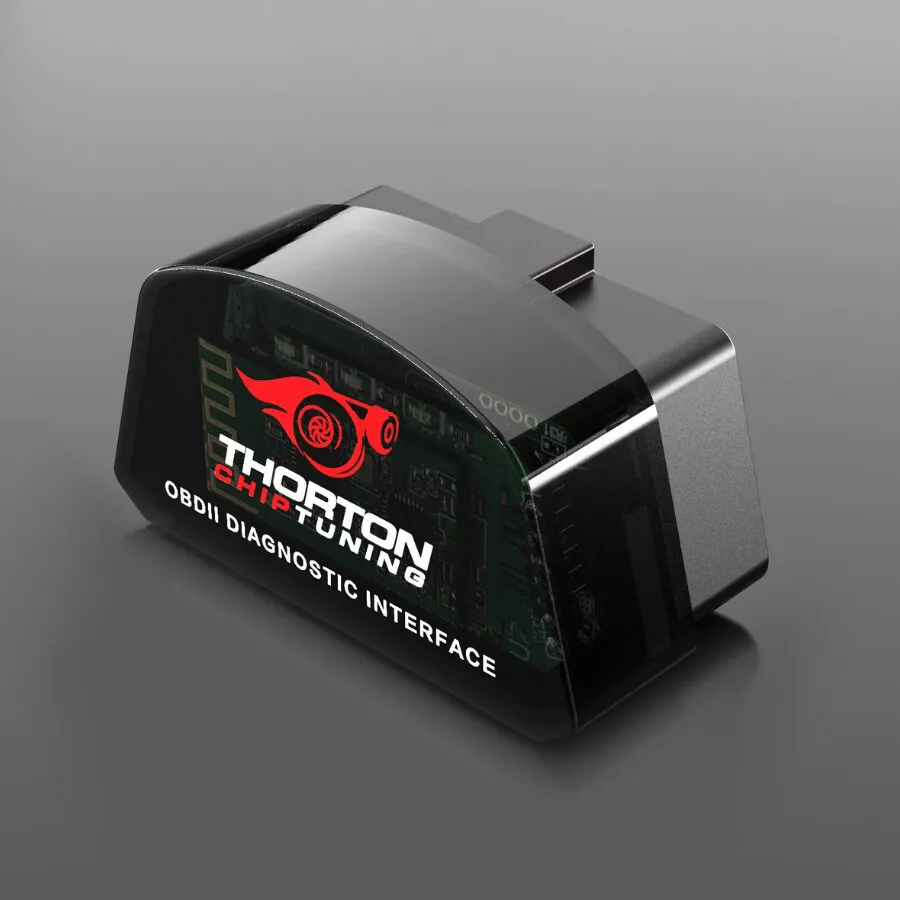
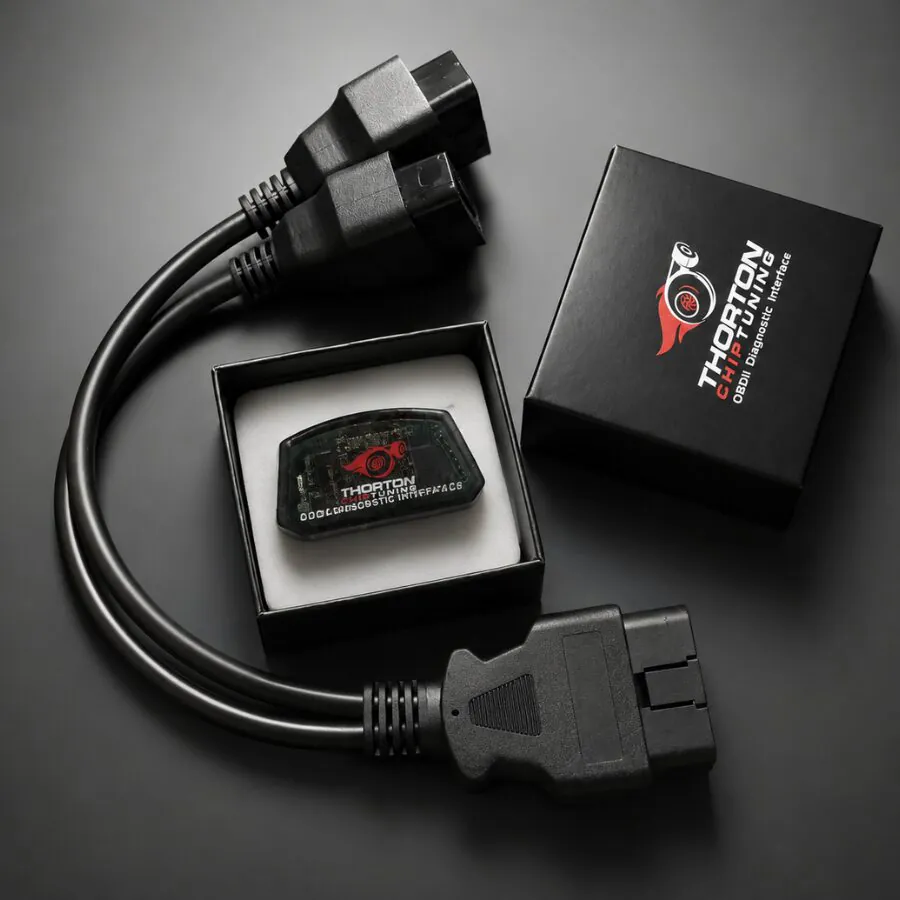
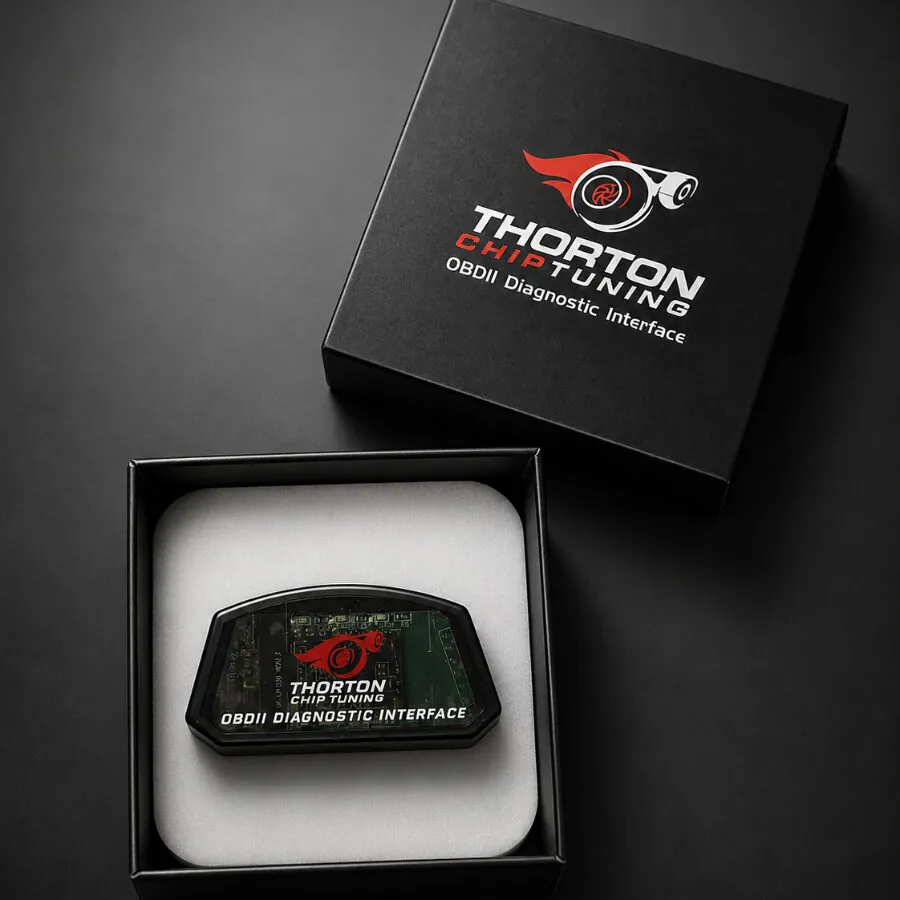
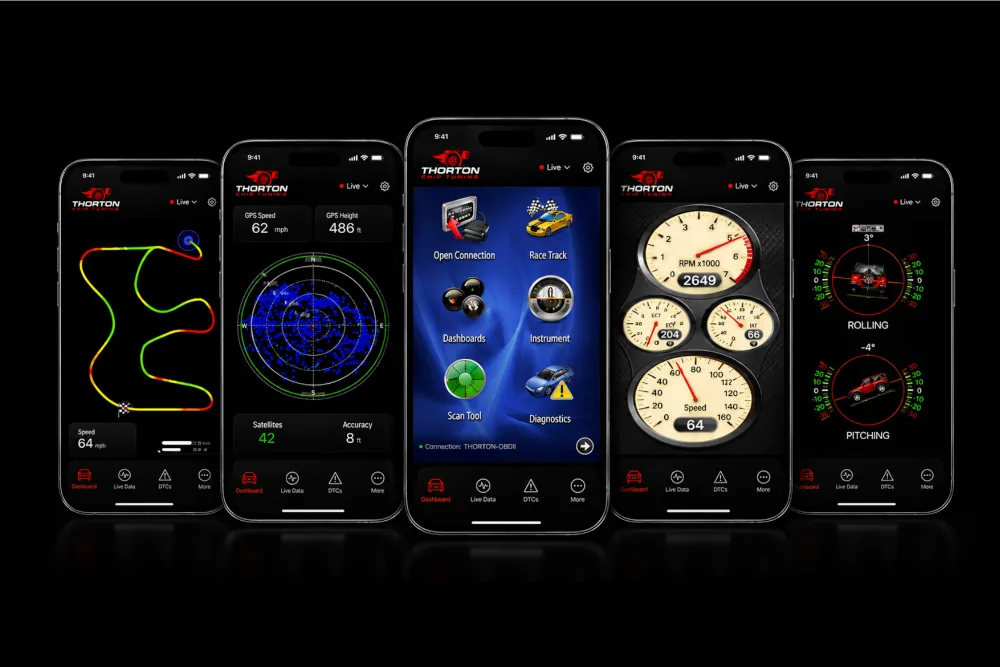
The companion to your Thorton chip. See real performance gains, monitor engine health and diagnose issues from your phone.
$59.95 on its own. The $10 comes off automatically when a Thorton Performance Chip is in the same order.