Journal

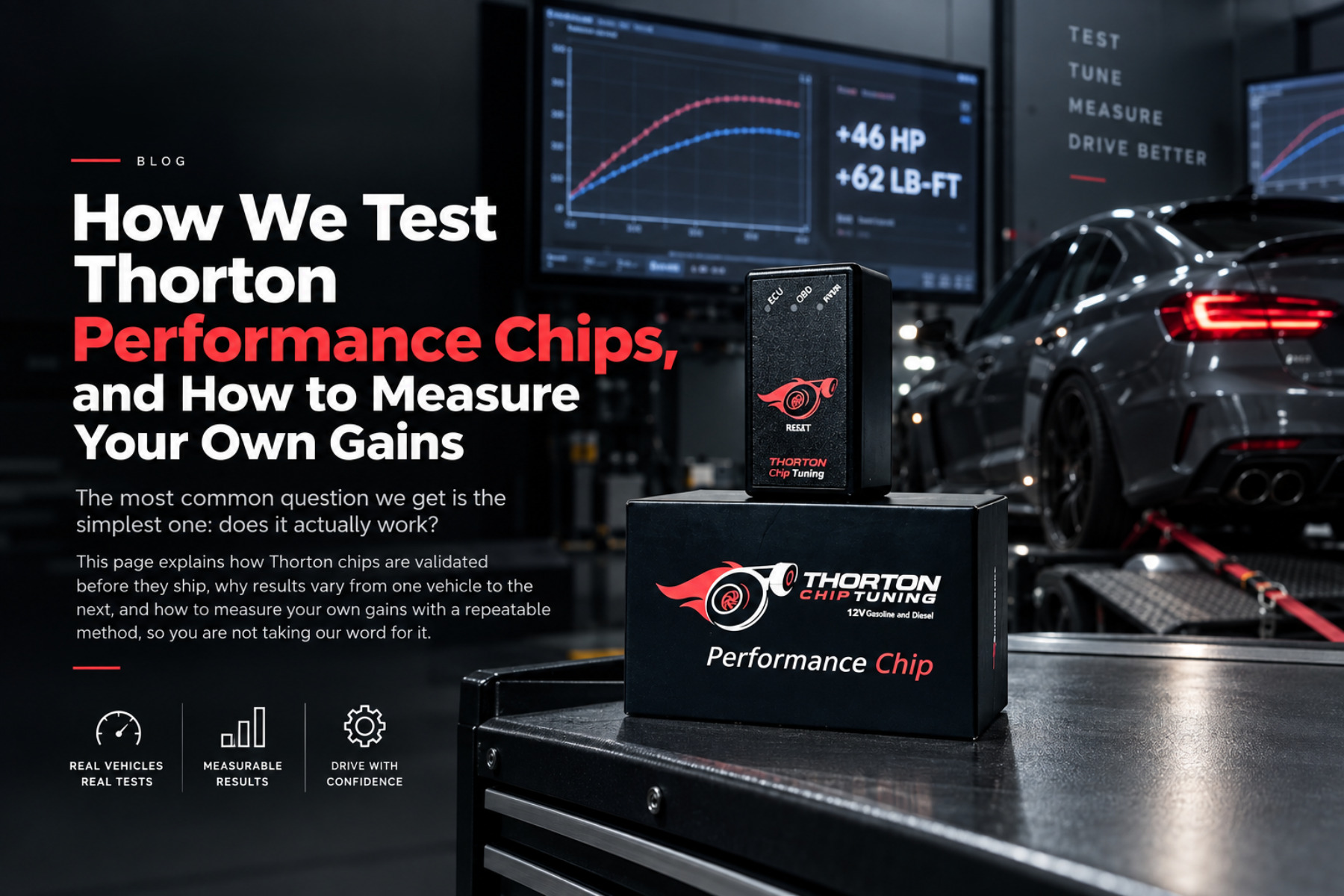
Chip tuning is the practice of changing how a vehicle’s engine control unit (ECU) manages fuel delivery, air, ignition timing and boost so the engine makes more power, responds faster, or runs more efficiently. Every car built since 1996 is controlled by this computer, and every one of them leaves the factory with conservative settings. Chip tuning adjusts those settings. It can be done by reflashing the ECU, by intercepting the sensor signals the ECU reads, or by plugging a module into the OBD2 diagnostic port. Thorton makes the third kind.
The ECU reads dozens of sensors many times a second: mass airflow, throttle position, manifold pressure, coolant and intake temperature, crank and cam position, oxygen content in the exhaust and knock. From those readings it decides how much fuel to inject, when to fire the spark, how much boost the turbo may build and how the throttle should respond to your foot. On modern trucks and SUVs it also talks to the transmission controller, which is why a tune can change how and when the gearbox shifts.
Manufacturers calibrate these maps for the whole world at once. The same Ford F-150 has to start at -30°F in Alaska, idle in Phoenix traffic in July and run on the cheapest fuel sold anywhere it is exported. The factory map is therefore a compromise, and the compromise almost always leaves performance and efficiency on the table.
| Method | How it works | Install | Reversible? | Typical cost |
|---|---|---|---|---|
| Plug-in OBD2 chip (Thorton) | Plugs into the diagnostic port and optimises the signals the ECU acts on, within the engine’s factory tolerances | About 60 seconds, no tools | Yes: unplug it and the car is stock, with no stored trace | $40 to $100 |
| Piggyback module | Wires in between specific sensors (usually boost and fuel pressure) and the ECU, altering what the ECU sees | 30 to 90 minutes, engine-bay wiring | Yes, but the wiring has to come back out | $300 to $800 |
| ECU remap / flash tune | Rewrites the calibration tables stored in the ECU itself | Laptop or handheld flasher, 20 to 60 minutes | Only by flashing stock back; most ECUs log the flash count | $400 to $1,500 plus dyno time |
A flash tune has the widest range because it can change anything in the map, including rev limits and speed limiters. That is also its risk: an aggressive map on a high-mileage engine, or the wrong file for a mid-year ECU revision, can do real damage, and the flash counter in most modern ECUs is exactly what a dealer looks at when a warranty claim comes in. A plug-in chip cannot exceed the engine’s own limits because it never edits the calibration; it works on the inputs the calibration already responds to.
A Thorton chip sits on the OBD2 port and works with the engine’s live data. It learns how you drive over the first few trips, then keeps the engine in the more responsive part of its factory map: slightly leaner cruise mixture for economy, sharper throttle mapping so the pedal does what your foot asks sooner, and, on turbocharged engines, quicker spool off idle. Because the ECU is still enforcing every safety limit it always did, the chip cannot push boost or timing past what the factory calibration allows.
Thorton chips come in three stages. Stage 1 targets up to 20 extra horsepower with a small economy gain, Stage 2 up to 40 horsepower, and Stage 3 up to 60 horsepower with the largest economy improvement for drivers who keep a light foot. Across the last twelve months of orders, about nine in ten Thorton customers chose Stage 3.
Two vehicles with the same chip will not gain the same amount. The variables that matter most:
The honest way to know what you gained is to measure it. Our Performance Analysis Kit is a Bluetooth/WiFi OBD2 reader that logs horsepower, torque and fuel economy to your phone, so you can record a baseline before the chip goes in and compare the same route afterwards.
Done within the engine’s design limits, yes. The risk in chip tuning comes from two places: flash maps that push boost or timing beyond what the hardware was built for, and hardware that is not installed properly. A plug-in chip avoids both. It cannot write outside the factory limits, and there is nothing to install beyond seating a connector. We cover the safety question in detail in Is chip tuning safe?, and the warranty question, including the federal law that governs it, in Does chip tuning void your warranty?
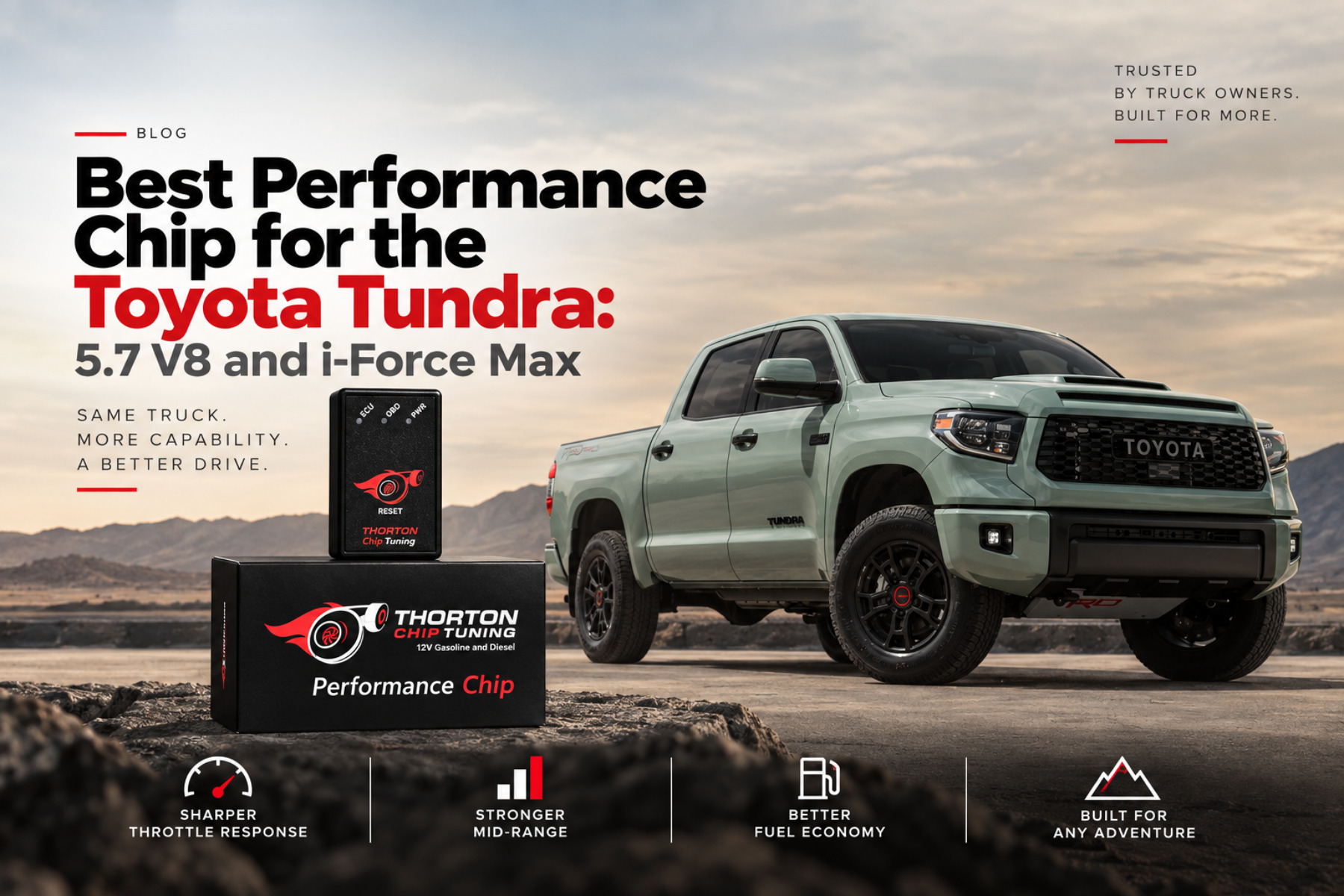
Our order history is a decent guide. Pickup trucks lead by a wide margin: the Ford F-150, Ram 1500, Silverado and Sierra 1500, Tundra and Tacoma are the most-tuned vehicles we sell, because owners who tow feel throttle response and mid-range torque more than anyone. Turbocharged cars come next: EcoBoost Fords, BMW and Audi four-cylinders, Volkswagen TSI engines and the Hyundai and Kia turbos. Naturally aspirated commuter cars gain the least in raw power but often see the best economy improvement.
Use the vehicle finder to select your year, make, model and engine, pick a stage, and the chip ships configured for your vehicle from Columbus, Georgia within one business day. Installation is a 60-second job in the driver’s footwell. If it does not do what you hoped, send it back within 30 days for a full refund.
Popular starting points: Ford, Chevrolet, Dodge and Ram, Toyota, Jeep and GMC.
Find your vehicle and see your gains in seconds.

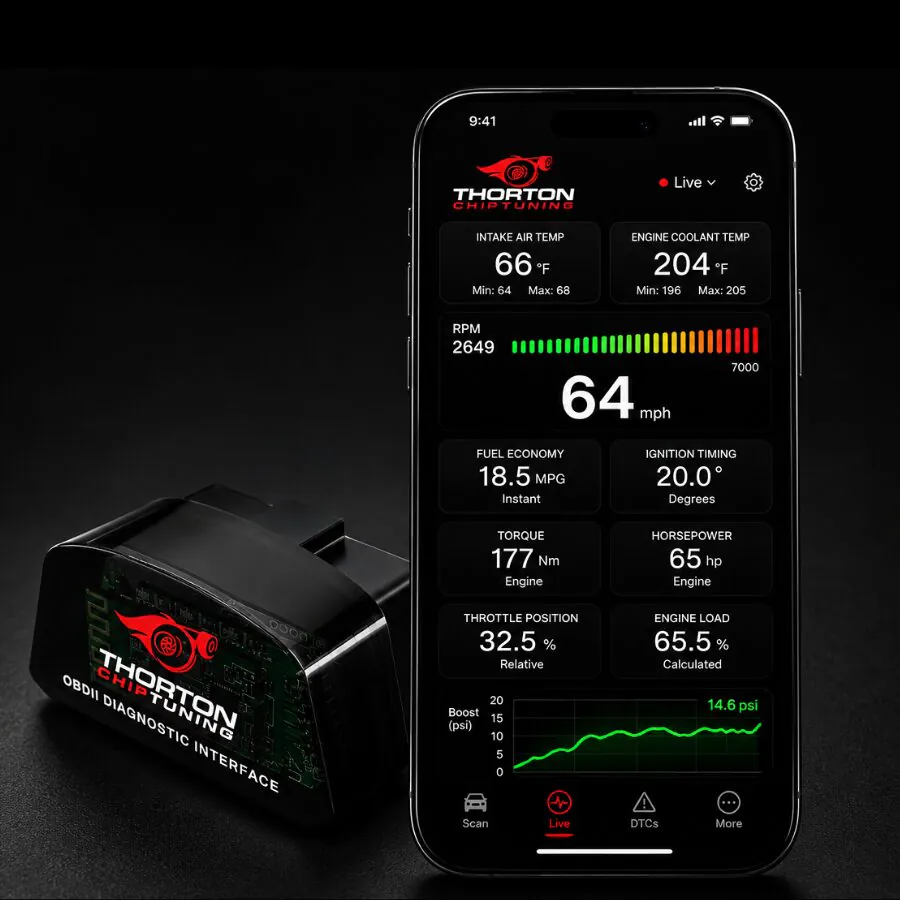
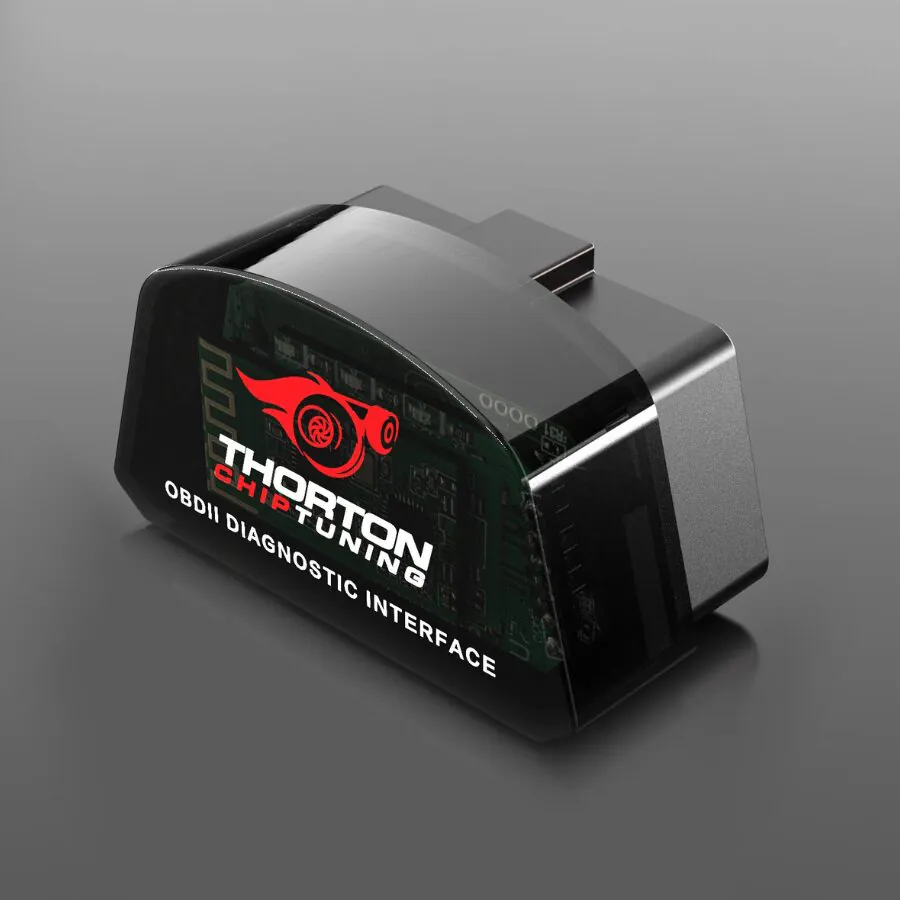
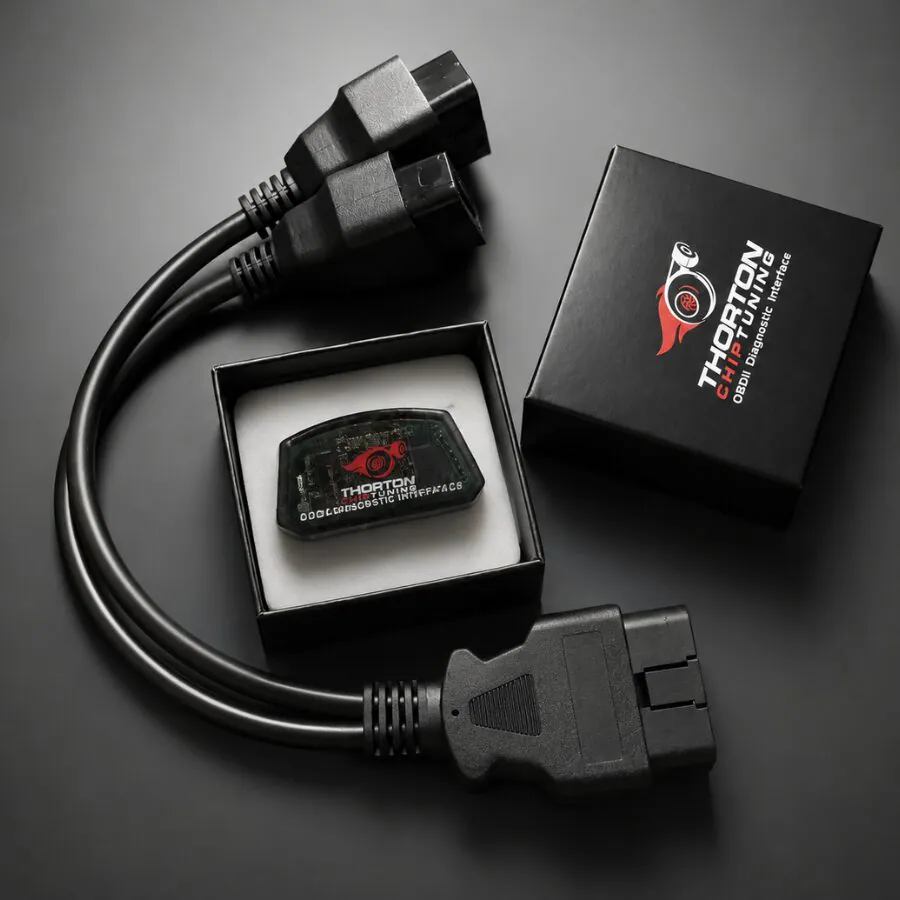
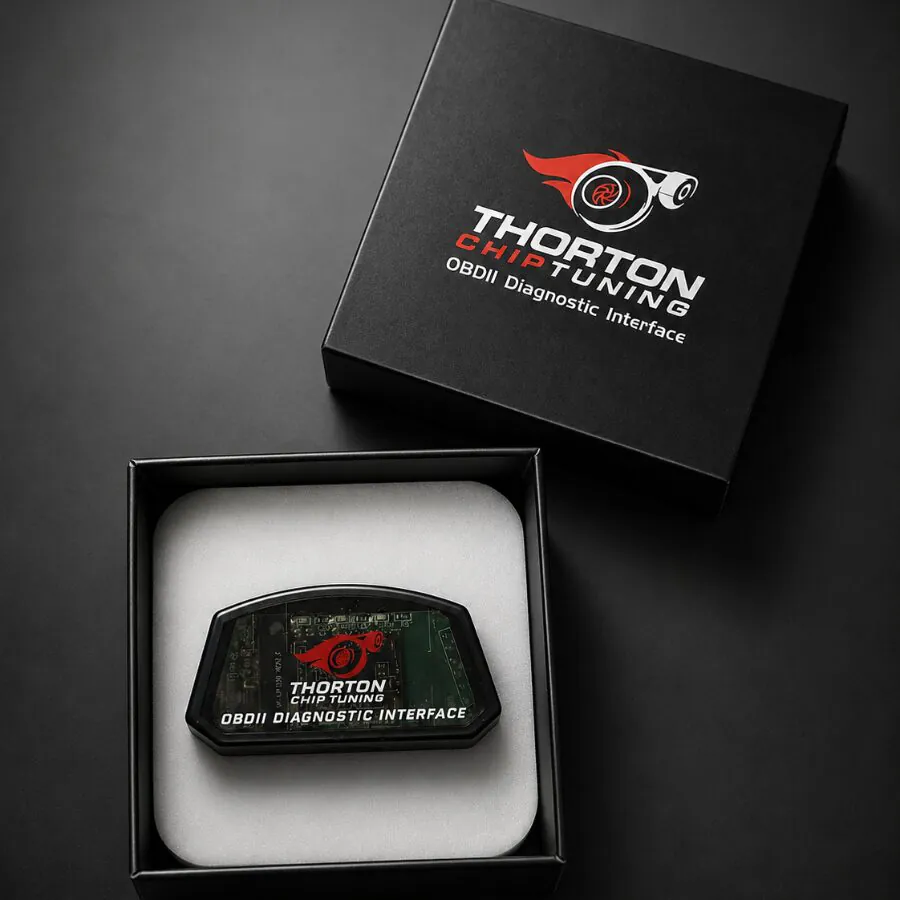
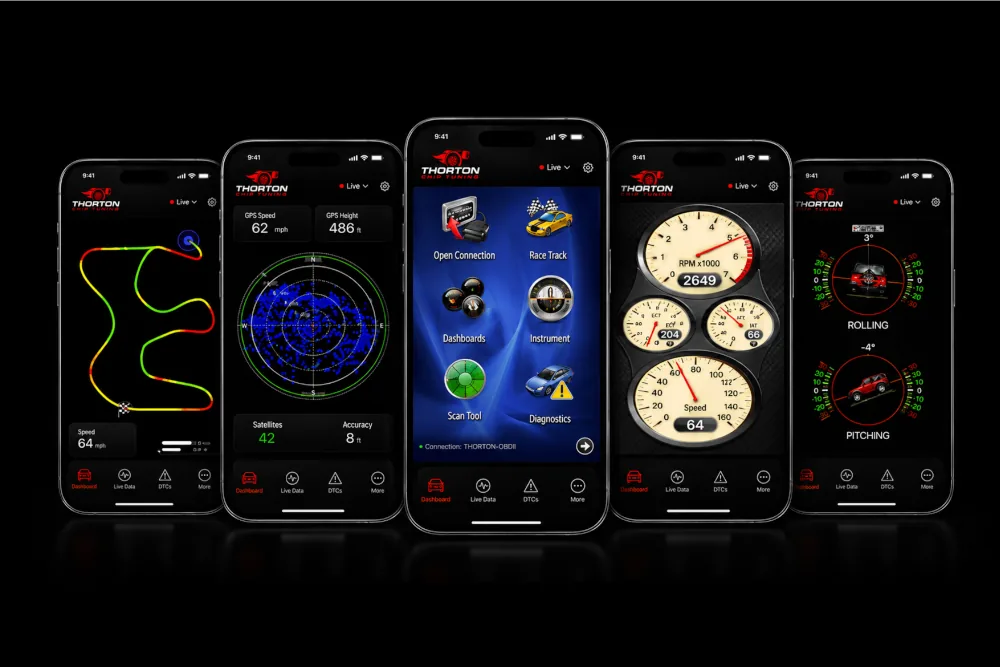
The companion to your Thorton chip. See real performance gains, monitor engine health and diagnose issues from your phone.
$59.95 on its own. The $10 comes off automatically when a Thorton Performance Chip is in the same order.