Journal

The Ford F-150 is the vehicle Thorton ships more performance chips for than any other, and the reason is simple: every current F-150 engine has headroom a plug-in chip can use. EcoBoost turbos spool sooner, the Coyote V8 gets a crisper throttle and stronger mid-range, and the PowerBoost hybrid’s gasoline engine responds the same way as the non-hybrid 3.5. This guide covers what changes on each engine, how a plug-in compares with a flash tuner for a truck under warranty, and what F-150 owners actually choose.
Turbocharged engines have the most to gain. The chip brings boost in earlier off idle and sharpens throttle mapping, which shows up as less lag pulling away with a load and a stronger 2,000 to 4,000 rpm range. The 3.5 EcoBoost is Thorton’s most common F-150 fitment; the 2.7 is close behind and responds at least as well because it runs more boost from the factory.
The Coyote gains mostly in throttle response and mid-range torque. Owners describe it as the truck feeling a gear lower without the revs. It is a naturally aspirated engine, so raw peak-power gains are smaller than on the EcoBoost, but the drivability change is what people feel every day.
The chip works on the combustion engine’s signals and does not touch the hybrid system. PowerBoost owners report the same sharper throttle as the standard 3.5 EcoBoost.
The chip is configured for F-150s back to 1996. On the 4.6 and 5.4 Triton the change is a firmer throttle and better mid-range, and the 5.4 in particular loses the soft pedal that makes the older trucks feel slow off the line.
Handheld flash tuners for the F-150 rewrite the PCM and can add real peak power on an EcoBoost by raising boost targets. They also cost $400 to $700 plus custom tunes, increment the PCM’s flash counter that Ford dealers check on warranty claims, and can shorten the life of a high-mileage turbo if the map is aggressive. A Thorton chip cannot push past the factory limits because the PCM still enforces them, costs $40 to $100, and unplugs without a trace before a service visit. For a daily-driven or towing F-150, especially one under warranty, the chip covers what most owners want. Read Does chip tuning void your warranty? for the detail.
Of the Ford chips shipped in the last year, 88% were Stage 3, 9% Stage 2 and 3% Stage 1. Stage 3 targets up to 60 extra horsepower. The stage guide explains the differences.
The OBD2 port is under the lower dash to the left of the steering column, usually uncovered. Engine off, plug in, start the truck, confirm the three LEDs light, and drive normally for a tank. Full steps in the installation guide.
The Performance Analysis Kit logs horsepower, torque and fuel economy from the OBD2 port to your phone. Baseline first, install, drive a tank, repeat the route.
Select your year, model and engine on the Ford performance chip page. Free US shipping, dispatched within one business day from Columbus, Georgia, 30-day risk-free trial.
Find your vehicle and see your gains in seconds.

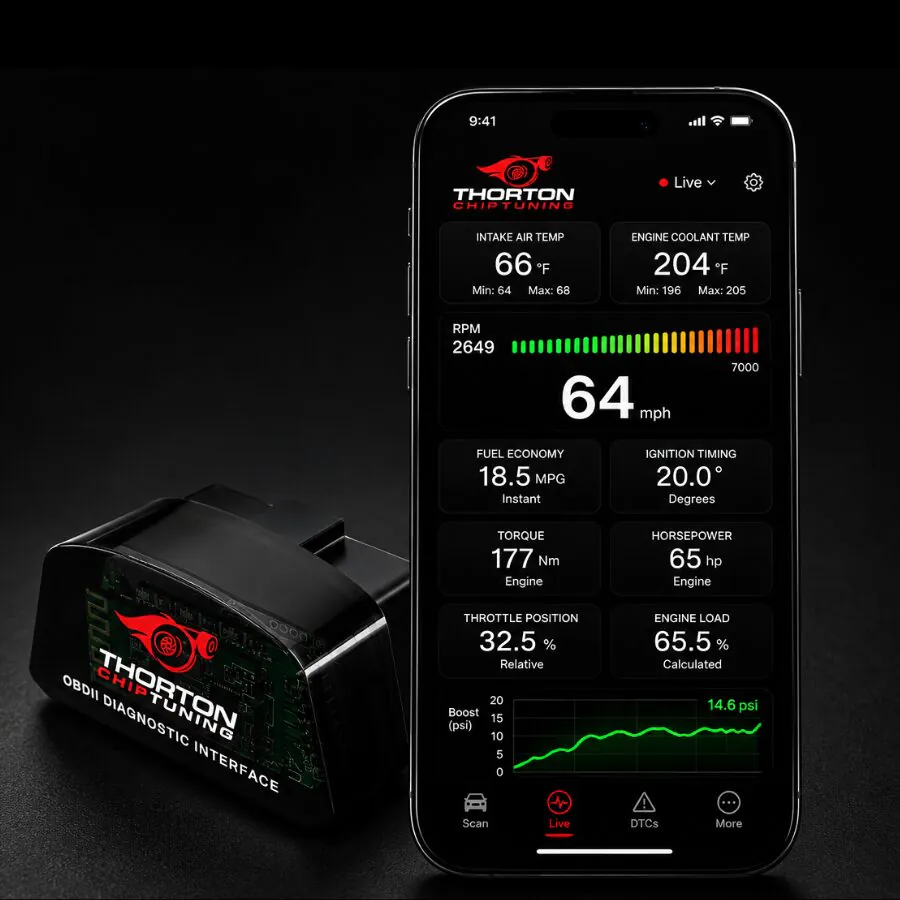
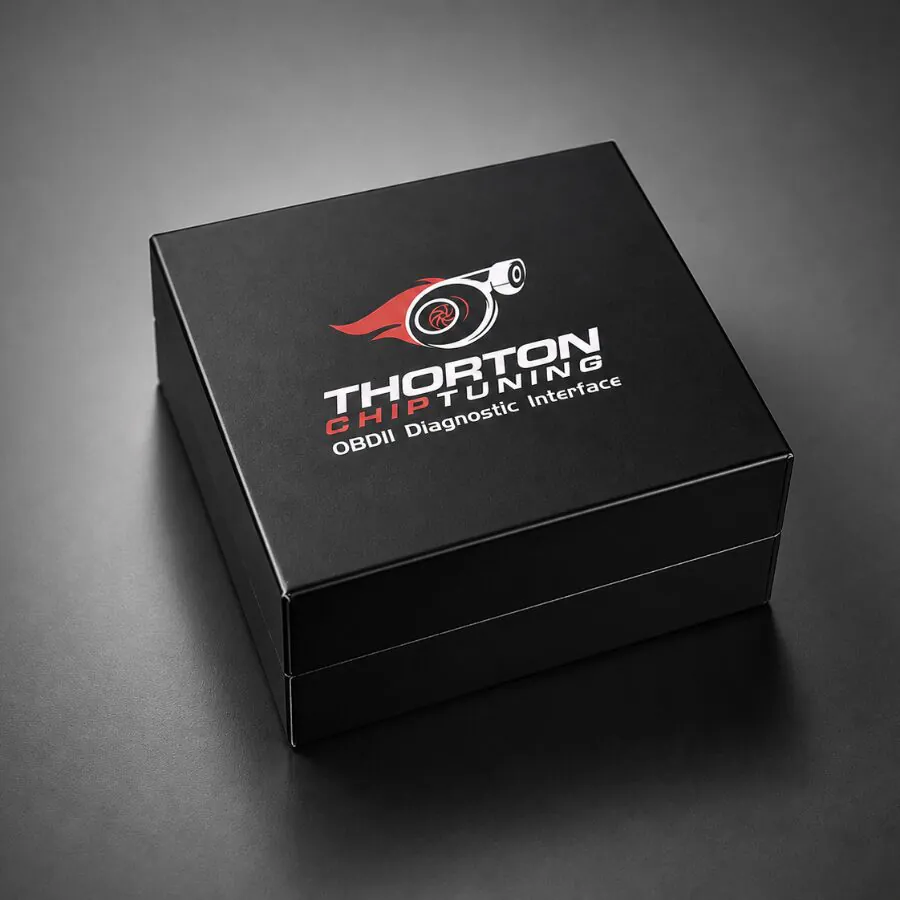
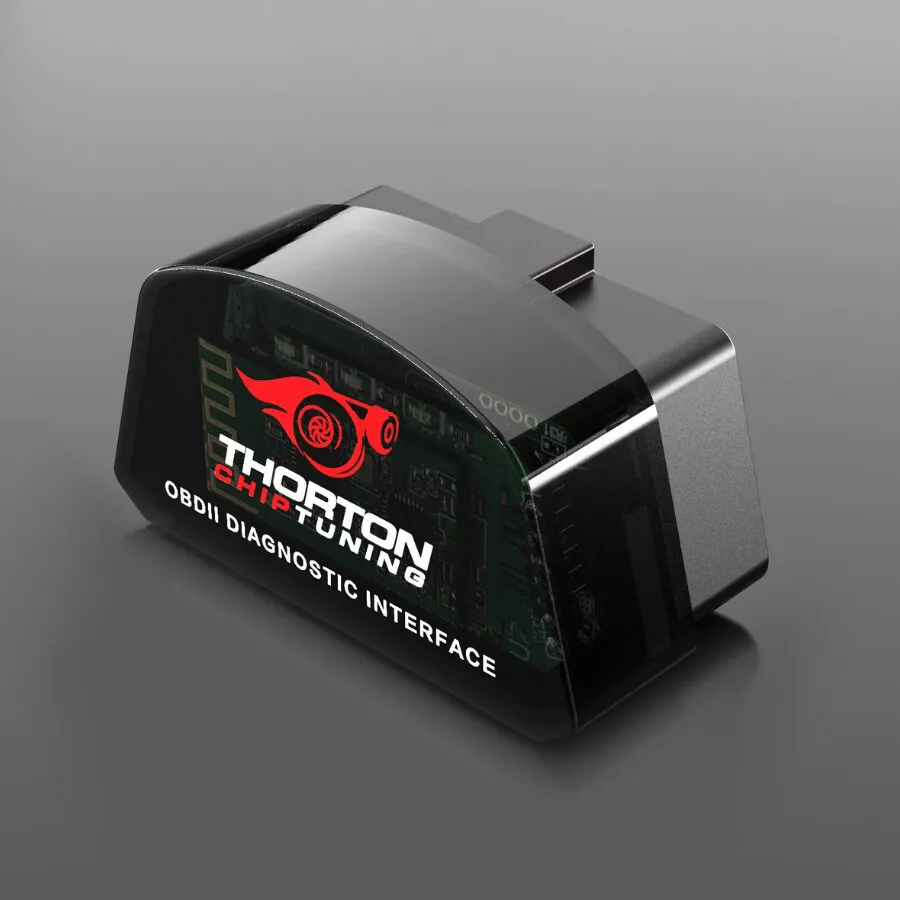
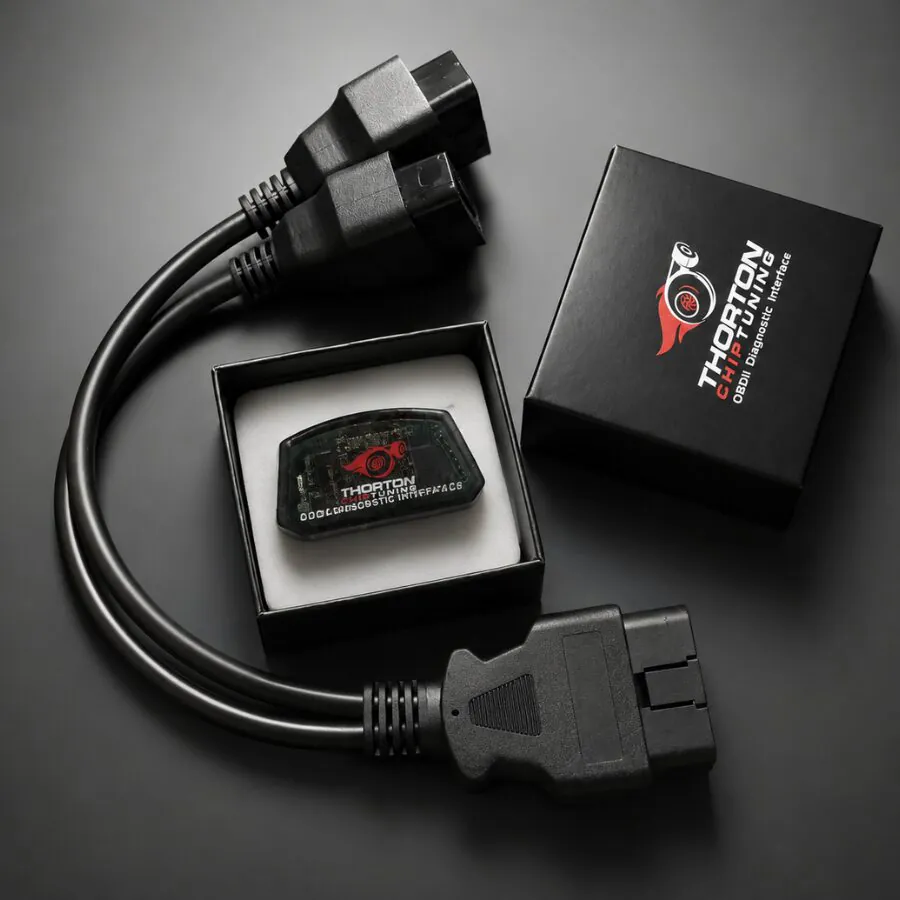
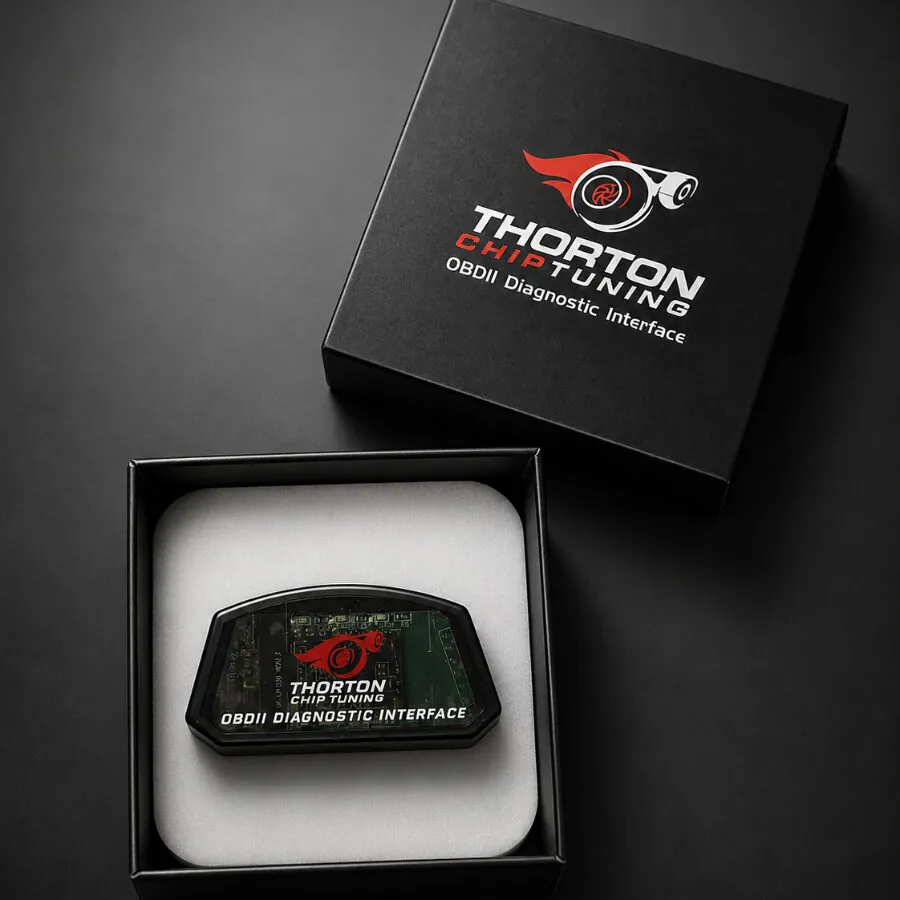
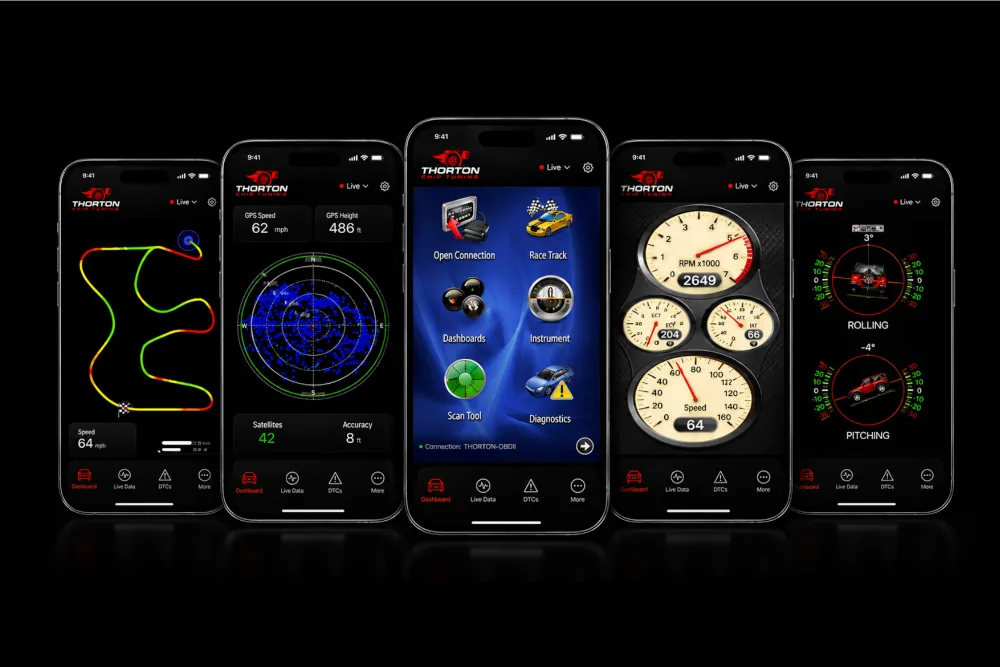
The companion to your Thorton chip. See real performance gains, monitor engine health and diagnose issues from your phone.
$59.95 on its own. The $10 comes off automatically when a Thorton Performance Chip is in the same order.
